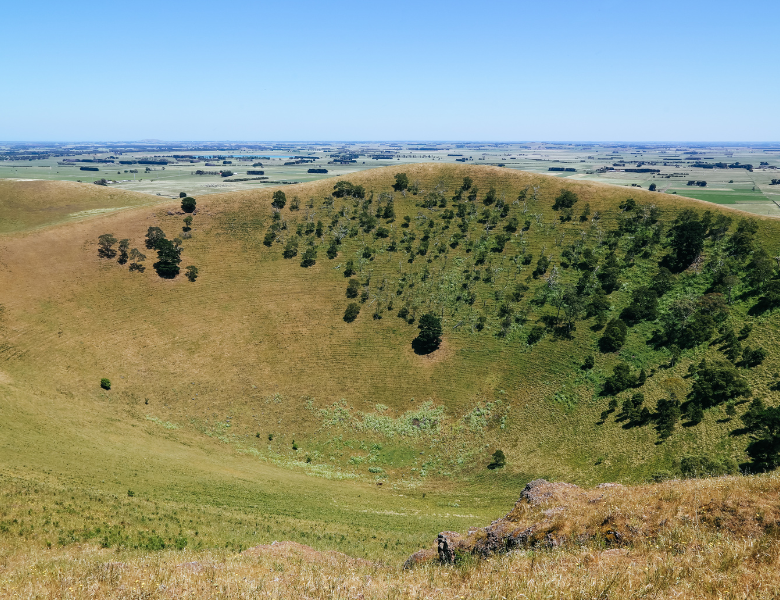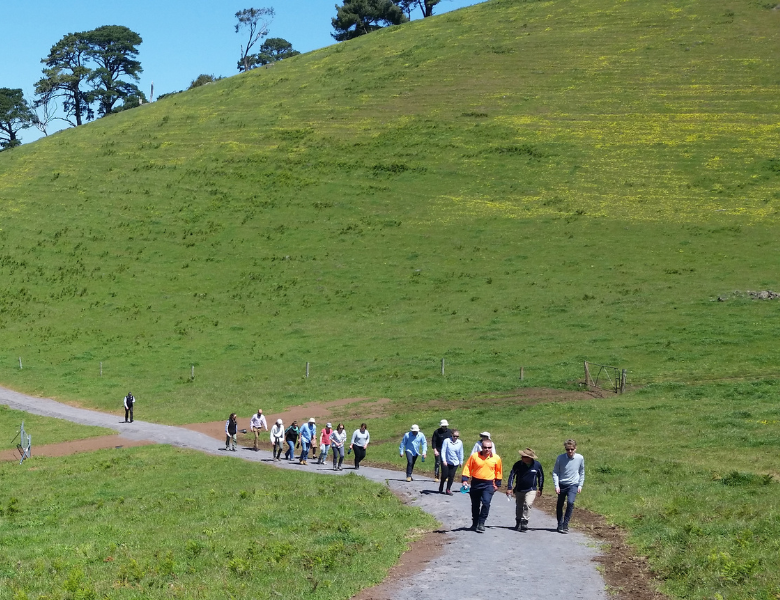

HISTORY OF MOUNT NOORAT
Indigenous History
The Indigenous people of Mount Noorat were likely the ancestors of the Giari Wurrung (also referred to as the Kirrae Wuurong). The Girai lands covered a territorty of 4,921 square kilometres from Warrnambool and the Hopkins River down to the coast at Princetown. The northern boundary was at Lake Bolac and Darlington, and the eastern boundary extended beyond Camperdown.
Girai Wurrung translates as 'blood lip' language. The Girai Wurrong people had 21 clans, each differing slightly in dialect. One of the clans was the Mount Noorat clan occupying the Mount and the nearby Pejark Marsh. More than 1,000 generations called this area home.
Based on available evidence Mount Noorat was known as Knorat or K'noorat by the local Aboriginal inhabitants. Prior to European settlement great gatherings or meetings of the Aboriginal clans from across southwest Victoria took place at Mount Noorat.
James Dawson, local settler and champion of Aboriginal interests, wrote of these gatherings:
A favourite place of meeting for the purpose of barter is a hill called Noorat, near Terang. In that locality the forest kangaroos are plentiful, and the kinds of the young ones found there are considered superior to all others for making rugs.
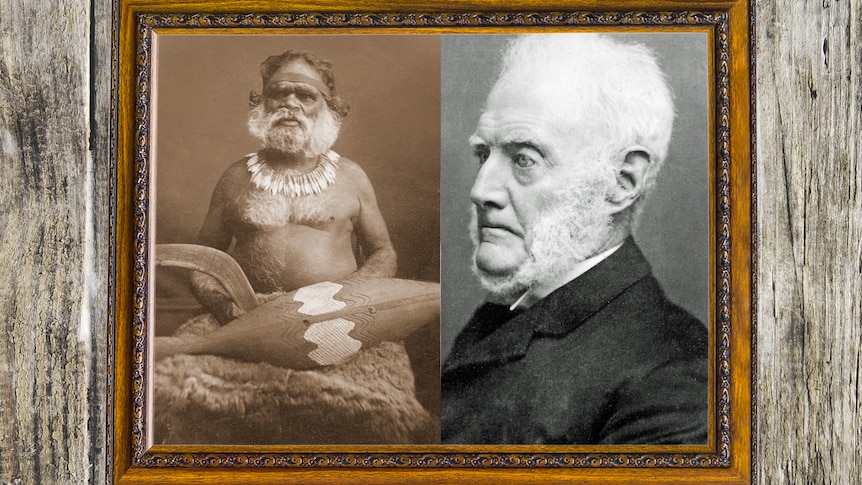
Wombeetch Puyuun and James Dawson