
Located on the edge of the small township of Noorat in SW Victoria, Mount Noorat is a scoria cone with a complex volcanic history. It rises abruptly to a height of 310m above sea level - some 170m above the surrounding volcanic plains and came into being through a series of volcanic eruptions. Fire-fountaining, explosions and extensive lava flows combined to form a range of volcanic features including one of the most distinctive scoria cones and craters on the volcanic plains of Western Victoria in Southeastern Australia.
Unique to Mount Noorat is the almost 160m deep circular crater. This is the deepest scoria-enclosed crater in Victoria and possibly Australia.
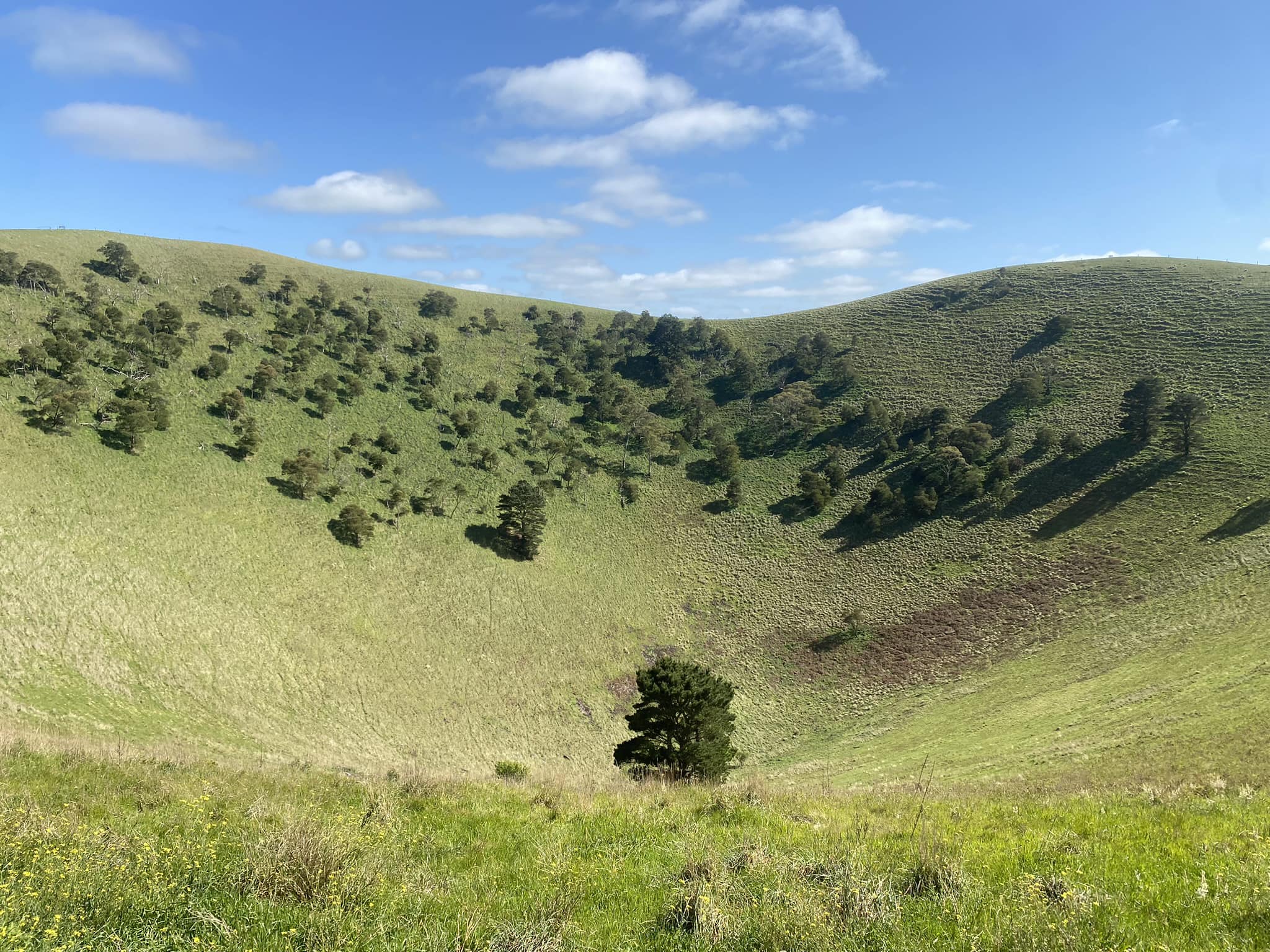
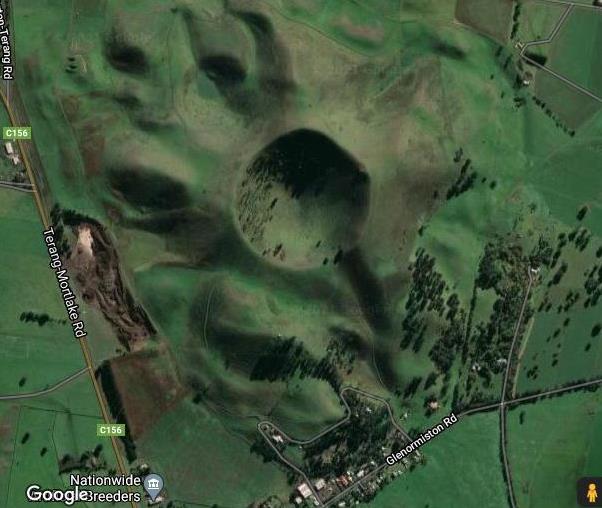
It is now estimated that Mount Noorat erupted around 100,000 years ago (Matchan et al., 2018). Geochronologists (scientists who determine the age of earth materials) at The University of Melbourne used the argon-argon (40Ar/39Ar) technique to determine this age.
Mt Noorat is a magnificent place to visit and enjoy. The walking trails on Mt Noorat provide a superb view not only of the crater but also of a substantial portion of the NVP and beyond it to the Otway Ranges to the east and the Grampians to the north.
Mt Noorat is not alone
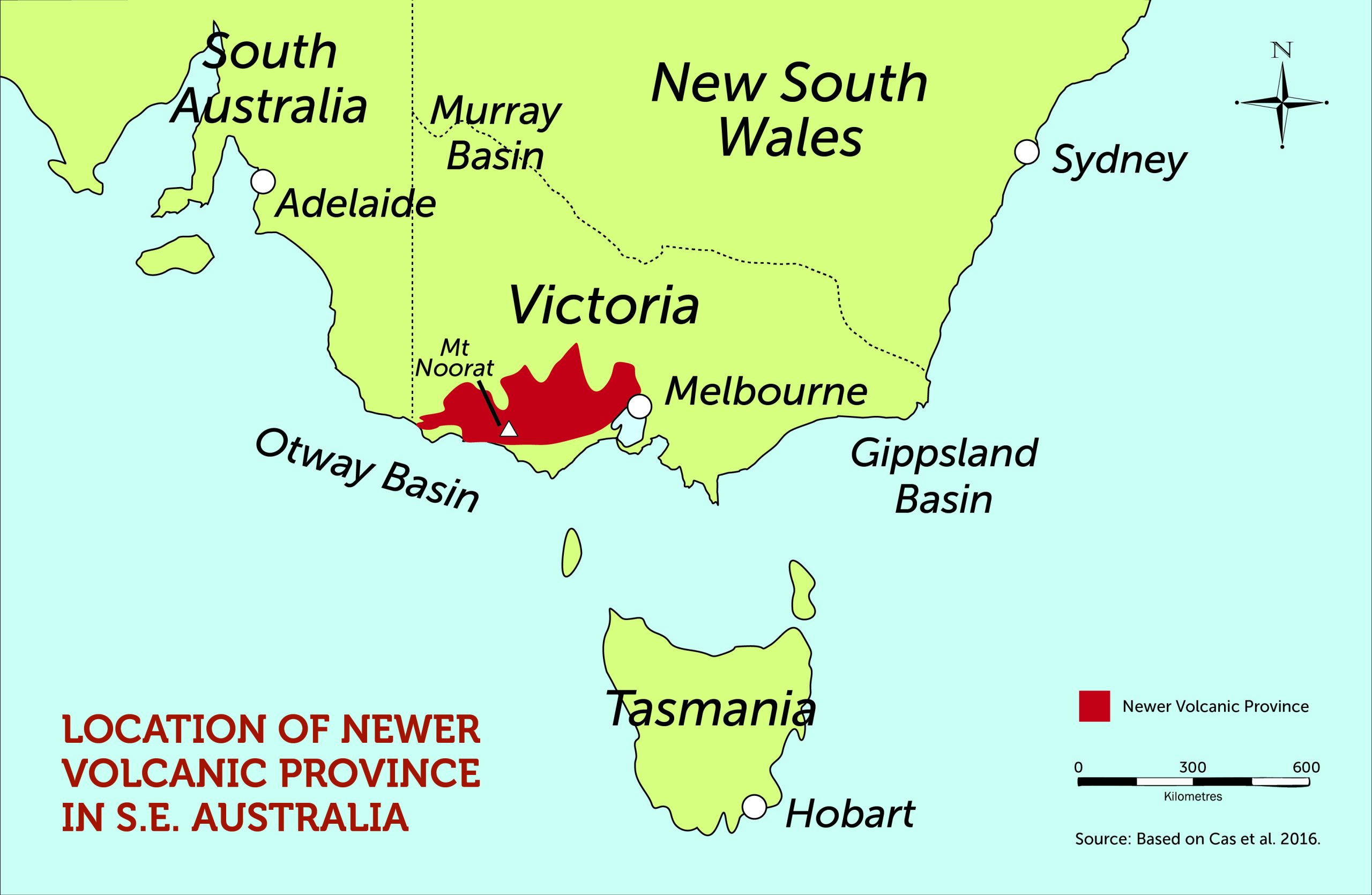
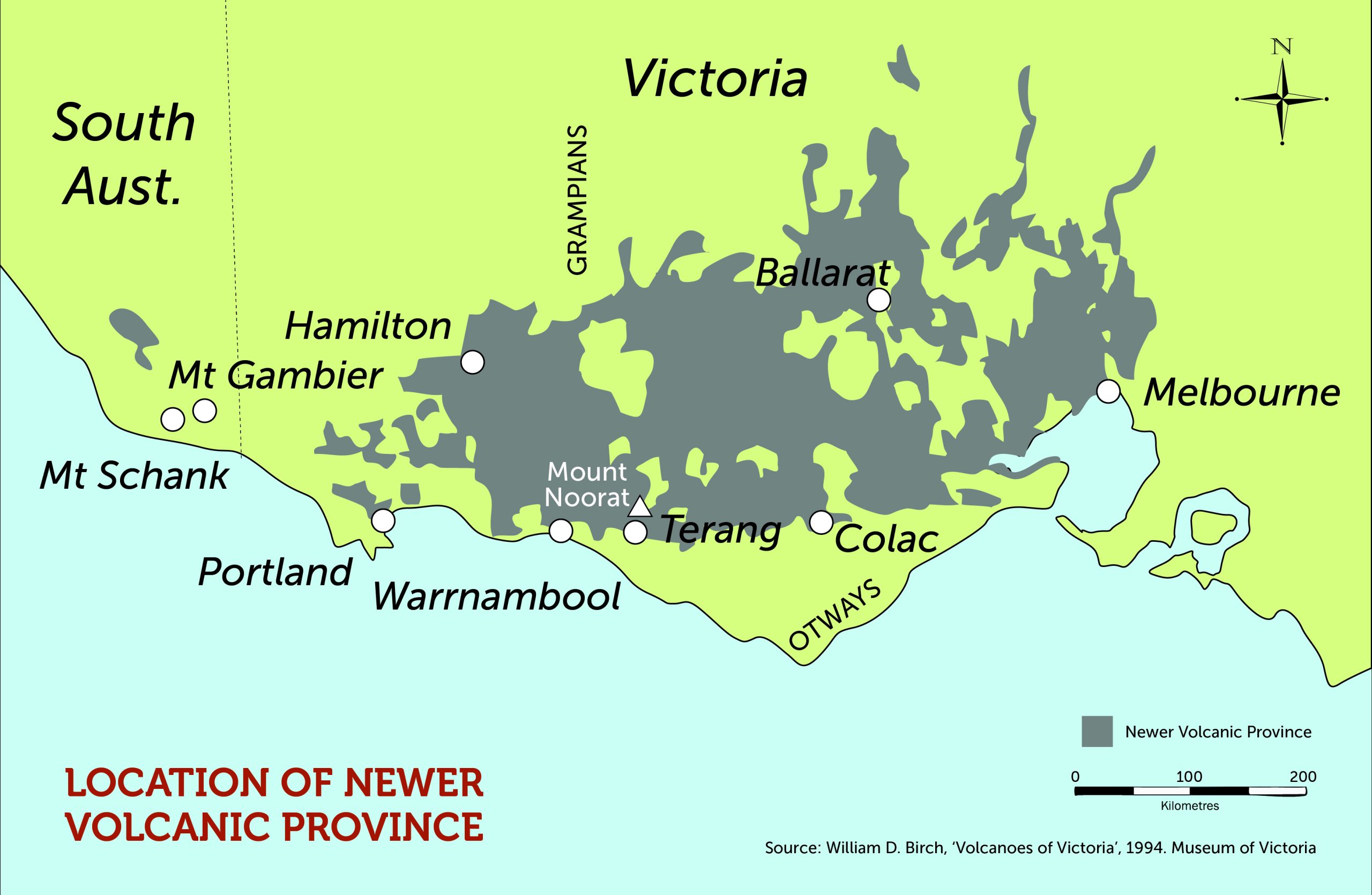
Mount Noorat is a significant feature of the Victorian Volcanic Plains (VVP). The VVP is the western part of the Newer Volcanics Province (NVP), a widespread field of over 4301 volcanoes extending across Victoria from Melbourne to the west of Mt Gambier in the SE of South Australia (see visuals to right and below).The Newer Volcanics Province is the name given to the region that displays the products of volcanism of mainly the last five million years …. but importantly also of volcanic activity as recent as approximately 5,000 years ago. With an average time between eruptions of 10-20,000 years it is still regarded as an active region. At 23,000 km2, the NVP is one of the largest volcanic provinces of its type in the world
Acknowledgement
Special thanks to Stephen Carey, School of Engineering, Information Technology and Physical Sciences, Federation University.
The content above is based almost entirely on Stephen’s document he provided to the Mount Noorat Management Committee in 2021 as part of his brief to research the geology of Mt Noorat for the Committee.
Please click on the link to access a copy of Stephen Carey’s full document.